

Train hard or frequently enough, and there will eventually come a point when doing more of the same heavy lifting is no longer productive. Learning how to use a deload week will help you manage fatigue, keep your training moving forward, and realize that 7 days of sensible training won’t erase months of hard work.
Key Takeaways
- A deload is a planned reduction in training stress that helps you manage fatigue without abandoning the gym altogether.
- You don’t necessarily need to deload every 4th week. Your training history, workload, performance, and recovery should help determine when it’s appropriate.
- Reducing training volume is often a practical starting point, but you can also adjust load, effort, exercise selection, or the overall structure of your training week.
- Look for trends, not one bad workout. Declining performance, unusually heavy weights, poor recovery, and sagging motivation across several sessions are better deload signals than a single off day.
- You won’t lose your gains because you spend a week training less aggressively. The goal is to return ready to train hard again, not to prove how much punishment you can tolerate.
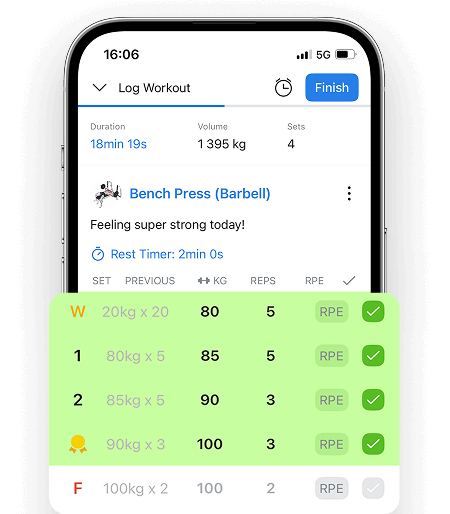
- Logging your workouts takes the guesswork out of deload timing. In Hevy, a stalled lift can show up in your exercise history.
What Is a Deload?
A deload is a period, typically one week (but may be longer or shorter), during which you scale back your training intensity or volume to promote recovery and set yourself up for a successful next block of training. It gives your body and nervous system more time to recover than what you could get from regular days off training.
That said, deload is not a rest week, or one where you do just any type of activity – inside or outside the gym. Even if your training is less challenging, it still brings unique benefits like:
- Continue to work out and maintain your streak; this is particularly important if you struggle to get back on track after taking time off the gym
- Work on your technique with lighter weights and without putting as much effort; often when the load on the bar goes down, trainees can set their ego to the side and focus on proper setup, full range of motion, pauses, and other important things that contribute to good form
- Getting your heart rate up and your blood flowing, which can help with muscle recovery
As you’ll read a bit later on, a deload can involve adjusting weights, sets, and reps in reserve (nearness to muscular failure), or even some combination of all of the above in your week’s training.
You might also use that adjusted week to address areas that have been neglected, such as mobility work, or temporarily replace a few demanding exercises with less taxing alternatives. Doing so reduces the demands of training so you can come back and train productively again.
And just to be clear, there are circumstances where taking several days of full rest is the right call. Even though that’s not what we’re talking about here, it’s worth mentioning for the record: If you’re sick, dealing with an injury, or genuinely exhausted, there’s no law that says you have to keep touching a barbell to prove your commitment.
Make No Mistake
Nothing about this is endorsing copping out, putting in half the effort, or cutting corners. Seeing gains takes hard work. And that’s the rite of passage that earns you a period of programmed time spent deloading.
If you’ve got to question – or even take a second to think about – whether you’re working hard enough in the gym when you lift, you’re probably not. A good-quality workout should, in most cases, be something that induces the need for recovery, and we can’t forget about or sidestep that reality.
The strongest, or most physically imposing, body compositions didn’t come from “always taking it easy” in the gym.
Why Deloads Can Be Useful
For one, as mentioned, you need to let your body recover from the work you do. Training is a stressor. A good stressor, but a stressor.
When you lift weights, you challenge your muscles, connective tissues, central nervous system, and ability to produce force. Your body responds to that challenge, and with appropriate recovery, nutrition, and repeated exposure, you can become stronger and build muscle.
But in real life, you still have to go to work, manage responsibilities, sleep, eat, and deal with whatever else the real world throws at you. Some weeks might be great, but other weeks will probably kick your ass. The issue is whether you’re managing it well enough alongside the other stuff to keep performing and progressing.
Second, your workouts can become more productive again. Many reading this may relate to having one of those stretches where the weights feel unusually heavy, warm-up sets seem to take more effort than they should, and the workout as a whole is a droning drudgery you just want to be over.
One bad session or bad week doesn’t mean too much, but if your performance has been trending downward, your motivation has taken a hit, and you’re struggling to produce the same quality of work, it’s worth looking at the bigger picture. And a deload can help reduce fatigue that’s interfering with your training.
Third, we can’t forget about the psychological side of this, and how deloads help prevent burnout.
Lifting can be demanding, especially when you’ve been following a structured program, trying to improve numbers, and pushing yourself to make progress for months at a time. That, in and of itself, can become repetitive and burdensome – mentally taxing.
A deload can offer just the useful change of pace you might need. You don’t have to prove you’re dedicated by making every session miserable. You need to be able to manage the process without things needing to get to that point.
When do You Need a Deload Week?
You have 2 ways to go about deloads:
- Reactive – once you start to feel signs of overtraining or burning out (there’s a list below), do a week of lighter training
- Scheduled – know in advance when your next deload is going to happen; you can schedule them after 4, 6, or 8 weeks of serious and consistent training
Both options have their pros and cons, so let’s look at each in some detail.
The Case for Scheduled Deloads
The biggest argument for scheduled deloads is that fatigue can be sneaky and sometimes lifters struggle to admit or recognize that they should step back. For driven and hard-working trainees, a scheduled deload can feel like it’s part of the plan and support recovery, so overtraining symptoms don’t ever creep in.
There is also the programming argument. Many workout plans will follow some sort of a progression, typically causing you to exert yourself more with each passing week. Knowing that there is a scheduled deload after several weeks of hard work can feel mentally liberating.
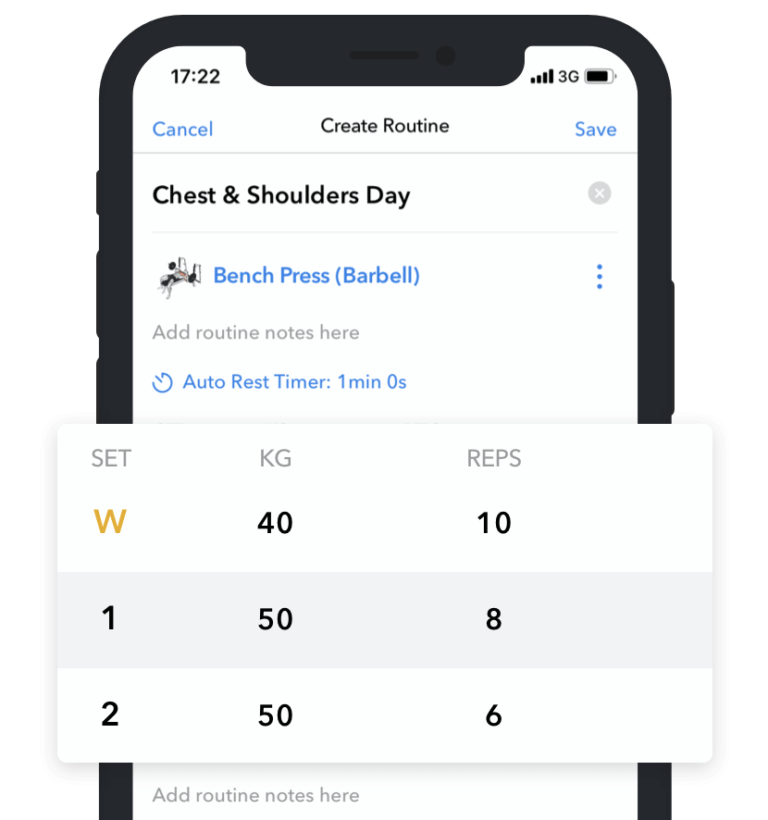
For instance, you can now enable and schedule deload weeks after each block of training (6 weeks) in Hevy Trainer. You push hard and progressively overload for a while, then you do a week of lighter sessions, and return to the next block fresh and motivated.

Finally, scheduling can be practical. You can plan a deload around a vacation, a busy week at work, or a competition, rather than having one forced on you at an inconvenient time.
The Case for Reactive Deloads
The downside of a fixed schedule is that it can’t see how you’re actually recovering. Everybody is different, and so is every life. As such, some people can handle a relatively high training volume for long stretches without much trouble. Others may need to pull back sooner, particularly if they’re training close to their limits, performing many demanding compound movements, or dealing with a stressful period outside the gym.
In my days running varsity track and field in university, my practices were Mondays, Tuesdays, Thursdays, and Fridays. There was an option to add Saturdays, which a few of my teammates took advantage of. But any time I added that 5th workout for a stretch, my performance would go down the drain. My body and nervous system simply didn’t respond well to that frequency and that much volume.
Your age, training experience, exercise selection, training intensity, volume, sleep, nutrition, and general life circumstances all influence how much work you can recover from. That’s incredibly important data to consider when it comes to personal thresholds.
Here are the signs you need a deload week:
- Your performance has been declining across multiple sessions, without an obvious explanation.
- Weights that normally feel manageable are consistently feeling unusually difficult.
- You’re struggling to recover between workouts, or persistent soreness and nagging aches are interfering with your next session.
- Your motivation has dropped noticeably, and training feels like a grind rather than a productive challenge.
- You’re having trouble maintaining your usual technique or effort because you’re simply not recovering well.
- Your grip is weaker than usual.
Consider these telltale signs in the context of the bigger picture; seeing one or two of these during one or two workouts doesn’t mean that you for sure need to deload. It’s about seeing a general trend across all the points for a little while. All things being equal, if you’re flat, sluggish, ultra-sore, and underperforming, it all points to your body needing a break.
What Does a Deload Week Actually Look Like?
Here are 3 ways to attack a deload week – either by reducing the amount of volume in your set plan, by lowering the weight lifted in it, or by using modifications to the exercises in question. Here’s what each may look like.
Example 1 – Reduce Volume
Suppose your regular upper-body session looks like this:
- Bench Press (Barbell) – 4 sets x 8 reps
- Chest-Supported Row (Dumbbell) – 4 sets x 10 reps
- Incline Bench Press (Dumbbell) – 3 sets x 10 reps
- Lat Pulldown (Cable) – 3 sets x 12 reps
- Triceps Pressdown – 3 sets x 12 reps
During a deload, you might keep the same exercises but perform about half the usual number of working sets, using similar loads with effort levels that feel comfortable. That would mean 2 sets of bench presses, 2 sets of rows, 1 or 2 sets of the remaining exercises, and no grinding or forced repetitions (2 to 3 reps in reserve, rather than failure or 1 rep left in the tank on your sets).
In Hevy, duplicate your regular routine, rename it (e.g., “Upper A – Deload”), and cut the working sets in half. Hevy shows last session’s weights next to each set, so you can keep your usual loads without guessing. Save deload versions in their own folder, and they’re ready whenever your training calls for one.
Example 2 – Reduce Intensity
For this example, imagine a lifter whose normal lifting session looks like this:
- Squat (Barbell) – 5 sets x reps w/ 100 kg
- Romanian Deadlift (Barbell) – 4 sets x 8 reps w/ 85 kg
- Walking Lunge (Dumbbell) – 3 sets x 20 reps (total) w/ 15 kg dumbbells
- Seated Hamstring Curl – 3 sets x 12 reps w/ 60 kg
Rather than keeping the same loads and simply reducing a few sets, this lifter could reduce intensity by lowering the weight on each of the exercises, perform the same number of working sets, and leave a couple more repetitions in reserve than usual. So:
- Squat (Barbell) – 5 sets x reps w/ 80 kg
- Romanian Deadlift (Barbell) – 4 sets x 8 reps w/ 70 kg
- Walking Lunge (Dumbbell) – 3 sets x 20 reps (total) w/ 10 kg dumbbells
- Seated Hamstring Curl – 3 sets x 12 reps w/ 45 kg
The goal is to make the session feel noticeably easier while maintaining good technique. This can be particularly useful after a block that involved frequent work near a lifter’s limits.
Example 3 – Do Less Strength Training Overall
This one’s simple: Get the benefits from a broader reduction in training demands. That may mean training 3 days instead of 5, with sessions that are three-quarters of the normal length, featuring a few familiar exercises and other modified regressions.
This approach may make sense when you’re dealing with persistent fatigue, life stress has been high, or the lifter simply needs a more substantial break from the usual routine.
There’s no “best option.” This is an individual situation that needs to be judged on a case-by-case basis. It may even differ on two different occasions for the same person. Pick the approach that fits your training style and addresses the problem you’re actually dealing with.
Conclusion
Deload weeks are a useful way to manage training fatigue, maintain movement practice, and protect your long-term progress. They don’t last long enough for your precious PRs to suffer. In fact, they serve a great purpose in getting your personal bests out of a plateau.
And when the deload week is over, return to your regular workouts. You can be serious about getting stronger without trying to set a world record every lifting session. Being mature as a lifter means knowing when to push the envelope and when to listen to and respect your body.
Train hard when it’s time to train hard. Reduce the workload when there’s a good reason. Then get back to work. That’s not taking the easy way out. That’s learning how to train.
FAQs
1. How often should I take a deload week?
For the most part, you should aim for a deload week after 4 to 8 weeks of serious, productive training. The closer you push to your limits (high volume and intensity), the more frequently you should deload. In contrast, if you mostly do lower-volume training and at a lower intensity, you could deload less frequently.
2. Can a deload week reduce injury risk?
A deload can help with injury prevention in the sense that it helps reduce fatigue, which can have a positive impact on technique. Additionally, a period of less challenging training can have a small to modest effect on joint and connective tissue recovery, so it may offer a small benefit in preventing overuse injuries.
3. What factors determine how often I should deload?
Age, training intensity, training volume, exercise selection, and recovery outside the gym (nutrition, sleep, stress management, and how active you are outside of working out) are the primary factors that influence how often you need to deload.
Training experience is also a factor. Beginners generally do less demanding training and could go longer without a deload. In contrast, more advanced trainees get more fatigued from each training session and could benefit from more frequent deloads.
4. How should I eat during a deload week?
Continue to eat mostly the same. Keep your protein intake high (1.6-2.2 grams per kilo or 0.7-1 gram per lb) and get enough calories. If you’re in a deficit, you may slightly bump your calories during the deload to support recovery; if you’re bulking, you can pull back the calories to maintenance since the additional calories likely won’t go toward building new muscle at that point.